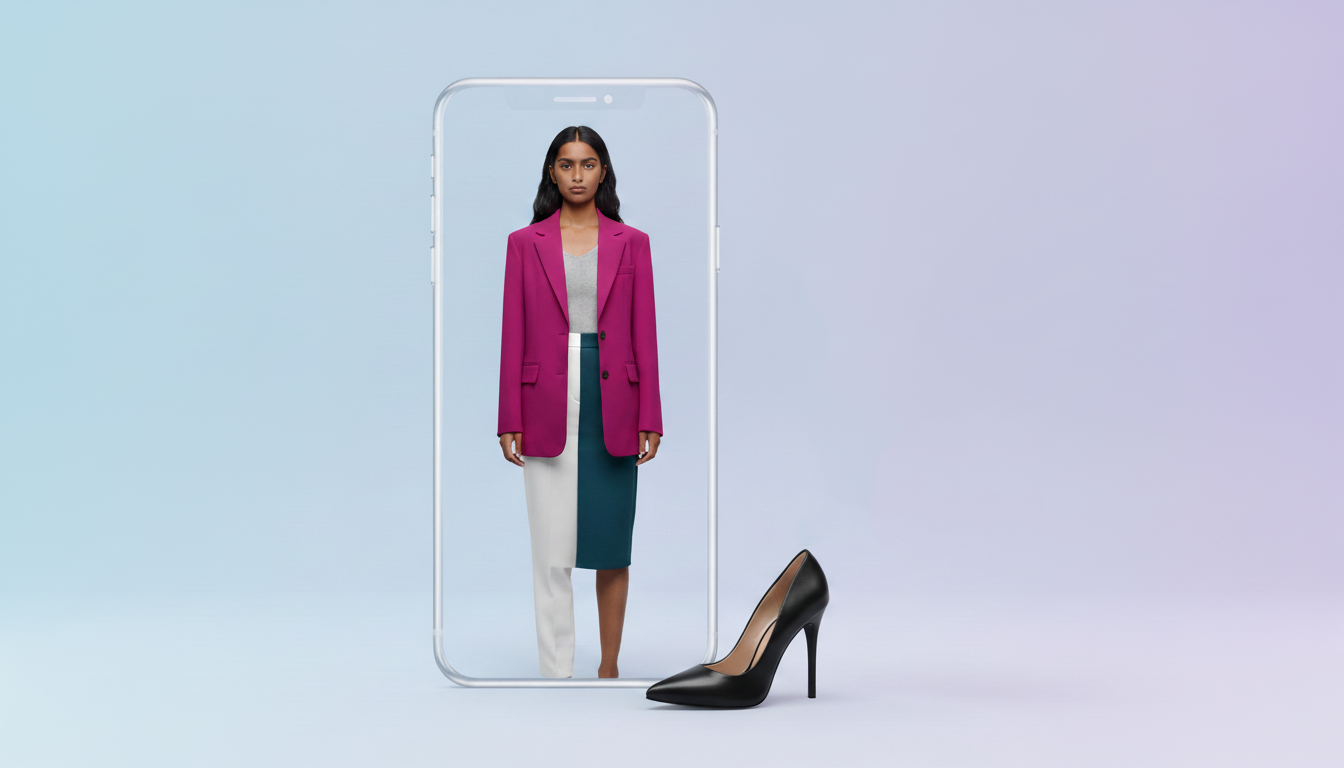
How AI Virtual Try On is Changing Online Shopping
AI virtual try on technology lets shoppers preview how clothing fits and looks using just a photo or avatar. It reduces returns, improves purchase confidence, and unlocks new personalization and analytics for brands.
Over the past few years, the fashion and retail industries have seen an incredible transformation driven by artificial intelligence (AI). Among the most exciting innovations is AI virtual try on — a technology that allows shoppers to visualize how clothing, accessories, or even makeup products would look on them without ever stepping into a fitting room.
This innovation bridges the gap between online and in-store shopping by using virtual fitting technology to simulate realistic product experiences. Whether it’s trying on a jacket, testing lipstick shades, or previewing sneakers in real time, AI virtual try on tools give consumers the confidence to buy online like never before.
Modern AI virtual try on platforms — like Fit It On — let shoppers see how clothes fit their own body in seconds, turning uncertainty into excitement and making online fashion truly interactive.
How AI Virtual Try On Works
To understand why AI fashion shopping is becoming the new norm, we first need to look at the technology behind it. Virtual try on systems combine several advanced technologies — including computer vision, machine learning, and 3D modeling — to replicate how clothes fit and move on the human body.
The process typically begins with a user uploading a photo or a short video. From there, computer vision algorithms analyze the person’s body shape, measurements, and pose. Machine learning models then map the selected garment onto the person’s body, adjusting for lighting, movement, and fabric texture to create a lifelike simulation.
Some advanced systems even incorporate physics-based rendering to mimic how materials drape and respond to motion. When combined with 3D modeling and generative AI, these tools can accurately simulate complex fabrics — from denim to silk — providing a near-real shopping experience from a mobile device.
Platforms like Fit It On take this a step further by allowing users to upload a single image and instantly visualize how different outfits fit their actual body type, leveraging AI to produce hyper-realistic and responsive virtual fittings.
The Benefits for Shoppers
The shift toward virtual try on isn’t just a trend — it’s solving real problems in the e-commerce industry. Here are the biggest benefits for consumers:
1. Confidence Before Purchase
One of the main frustrations in online shopping has always been the uncertainty of fit. With AI-driven virtual fitting technology, shoppers can see exactly how an outfit would look on their body before they click “buy.” This reduces hesitation and enhances trust between consumers and brands.
For example, Fit It On uses real-time garment mapping that gives users a visual preview of the fit and silhouette. The result? More confident purchases and fewer post-buy regrets.
2. Reducing Returns
Clothing returns remain one of the biggest challenges in e-commerce, with up to 30% of fashion items being sent back. By showing shoppers exactly how products will look and fit, AI virtual try on significantly lowers return rates — saving both customers and retailers time and money.
3. Personalized Shopping Experiences
Virtual try on systems often collect data on body shape, skin tone, and style preferences. This allows them to recommend products that are not only the right size but also match a user’s aesthetic and comfort. Personalized fashion suggestions enhance user satisfaction and make online shopping feel tailored to the individual.
How It Helps Brands
The benefits of AI fashion shopping extend far beyond the consumer side. For brands and retailers, virtual fitting technology offers a new dimension of engagement, insight, and profitability.
1. Higher Engagement & Conversion Rates
When users can virtually “try before they buy,” they spend more time interacting with products and are far more likely to complete a purchase. According to retail studies, interactive AI experiences can increase conversion rates by up to 60%.
2. Valuable Data Insights
Through AI virtual try on, brands can gain valuable data about their customers’ preferences — from fit and size trends to color popularity. This data helps companies improve product design, reduce inventory waste, and predict future fashion demands.
For instance, when users interact with Fit It On, aggregated anonymized data can help brands understand which garments attract the most engagement or fit certain demographics best — fueling smarter product decisions.
Challenges & Limitations
Despite its remarkable progress, AI virtual try on technology isn’t without limitations. Some of the most common challenges include:
- Accuracy: Even with advanced 3D modeling, minor misalignments or unrealistic textures can still occur.
- Lighting and Environment: Poor lighting or inconsistent photo quality can affect the realism of virtual fittings.
- Body Diversity: AI models must continue improving to represent different body shapes, sizes, and skin tones fairly.
- Privacy Concerns: Since these tools rely on personal images, strong data security and privacy practices are crucial.
Examples of Companies Using AI Try On
The popularity of virtual fitting technology has inspired a wave of innovation across global brands and startups. Let’s look at some key examples:
- Amazon: The retail giant has experimented with AI-driven virtual fitting rooms that let users visualize outfits on their personal avatars before checkout.
- Nike: Through its “Nike Fit” app, the brand uses computer vision and AI to measure feet and suggest the perfect shoe size, reducing mismatched orders.
- L’Oréal: In beauty, L’Oréal’s AR-powered try on tools let users test makeup virtually using real-time face-tracking.
- Zeekit (acquired by Walmart): This startup’s virtual try on platform lets shoppers upload photos and see themselves in clothing from major retailers.
These examples prove that AI try on isn’t just a novelty — it’s becoming a competitive necessity in fashion and beauty e-commerce. According to a McKinsey report on retail tech, virtual try on technology is expected to be one of the top digital drivers of customer engagement by 2030.
The Future of Online Shopping with AI
The future of online shopping lies at the intersection of AI, augmented reality (AR), and immersive virtual spaces. Imagine walking through a digital store, guided by a virtual influencer, and trying on outfits in the metaverse — all powered by the same AI virtual try on systems we’re seeing today.
With integration into AR glasses, mobile apps, and metaverse platforms, virtual try on will become not just a convenience but a standard part of how we experience shopping. The ability to instantly visualize products in our environment — or on ourselves — represents the next great leap in e-commerce evolution.
Conclusion
AI virtual try on technology is revolutionizing online fashion by merging convenience, personalization, and confidence into a single experience. From major brands like Nike and Amazon to innovative platforms like Fit It On, virtual fitting tools are transforming the way people shop online — making it faster, smarter, and more inclusive.
If you’d like to experience how AI is reshaping online fashion firsthand, try our free Virtual Try On Tool — upload your photo and see your perfect fit in seconds.
Discover how AI is transforming the way we shop.
Get Started for Free